What to Leave Standing, and What to Clear
November 4, 2026
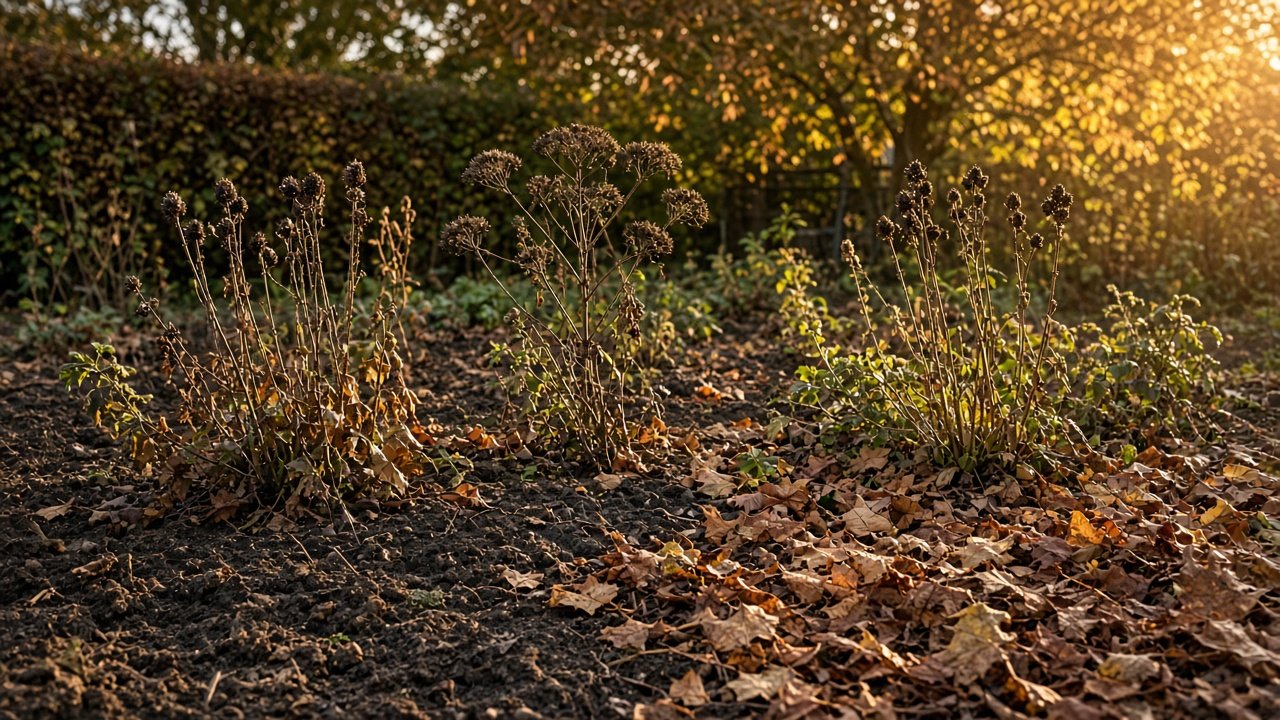
Fall cleanup is two jobs. A perennial border can keep its stems and a share of its leaves. A vegetable row should be emptied, because that is where last year's pests wait.
Your zone, and your frost date
The USDA Plant Hardiness Zone Map tells you which perennial plants are likely to live through winter in a place. It uses the average annual extreme minimum temperature from 1991 through 2020, not the coldest night on record and not the first frost. Zones run from 1 to 13, in steps of about 10 degrees. Each zone splits into a and b, about 5 degrees apart. Enter your ZIP code and treat the number as a guide. Wind, soil, moisture, humidity, snow, winter sun, and how the plant was set in the ground all matter. A south wall is warmer than the open yard, and a low spot can be a frost pocket. A plant at the cold edge of its zone can die in a rare freeze. Dry autumn soil can injure a plant the map calls hardy, because it goes dormant already short of water.
A zone is not a frost date. Frost is local. University of Maryland Extension tells gardeners to look up the average first fall frost for their own county, then watch the forecast. The chance of 32 degrees can change inside one town with wind, elevation, buildings, and water. Basil, tomato, cucumber, pepper, zinnia, and marigold are hurt or killed by a freeze, so pick that harvest before a hard frost. Kale, collards, cabbage, and turnip greens often taste better after cold. Ask your local extension office for the frost dates they use where you live.
What can stay
You do not have to cut the perennial bed to the ground after the first freeze. Leaves, stems, dried flowers, and seed heads give the border something to look at, shield crowns and roots, and catch more leaves. Coneflowers and ornamental grasses are worth leaving. Seed heads of black-eyed Susan, sedum, purple coneflower, Joe-Pye weed, and marigold feed finches and other seed-eating birds through winter.
Swallowtails and luna moths overwinter in the leaves, and a bumble bee queen may use the litter. Some insects lay eggs on the standing plants, and some butterflies pupate there. Leave that growth until spring. If you cut hollow stalks, bundle them for small carpenter bees, mason bees, and leafcutter bees.
Leave some bare ground. About 70 percent of native bee species nest in the soil. A bed sealed under thick wood chips, plastic, or rock, or a bed tilled under in the fall, gives them nowhere to go. If you mulch with leaves, keep a few open patches.
What should go
Remove plants that were diseased or full of pests, and do not compost them. Bee balm and phlox with powdery mildew, iris with borers, and a lilac with leaf spot belong in that pile. Most home compost never gets hot enough to kill those organisms.
Deadhead plants that reseed into a nuisance, including blackberry lily, garlic chives, and golden Alexander. Cleome and cosmos do the same in an annual bed. In the vegetable garden, pull winter annual weeds that sprout in the fall, including henbit, common chickweed, and shepherd's purse.
After the first frost, clear the vegetable row of leaves, stems, and fruit. Pests such as squash bugs, and the diseases that rode with them, overwinter on that debris. Compost it only if the pile reaches at least 140 degrees. Most home piles do not. Most municipal sites do. Under fruit trees, pick up dropped apples, pears, and cherries, and rake leaves that may carry apple scab, so codling moth and apple maggot have fewer places to wait. Leave healthy asparagus and rhubarb tops, and pull them back before they smother a strawberry crown.
Clear annual beds. Empty pots that crack in a freeze and store them indoors. Dig tender perennials and bring them in. They will not survive a deep freeze in the ground.
Leaves, three ways
A thick mat of leaves can kill a lawn, because the grass cannot get light. If only 10 to 20 percent of the lawn is covered, leave it. Otherwise rake the leaves into the beds, or mow a thin, dry layer until the pieces fall between the blades. Do not mow every leaf. Chopping them takes the shelter insects are using.
Whole leaves in a bed protect roots. Piled on crowns, they can mat and smother strawberries and herbaceous perennials. Shred or compost leaves before you use them as mulch, and do not bury the crowns.
Leaf mold is not compost. Fungi break down leaves alone, and you do not have to turn the pile. Keep it about 3 feet tall and 3 feet wide, and keep it moist. It finishes in six months to two years, sooner if you shred the leaves, depending on the leaf and the warmth. When the bottom is dark and crumbly, spread a thin layer or work it into the top few inches of soil.
For finished compost, the US Environmental Protection Agency counts dry leaves as a carbon-rich brown. Start with 4 to 6 inches of twigs or wood chips so air can move. Add at least two to three times as much brown material, by volume, as greens such as food scraps, and cover the scraps with 4 to 8 inches of dry leaves. The mix should feel like a wrung-out sponge. A tended pile can reach 130 to 160 degrees, which helps reduce pathogens and weed seeds. Keep out diseased plants, weed seeds, meat, fish, bones, dairy, fats, oils, herbicide-treated plants, and pet waste. Turn it with a fork now and then.
New plantings, then the tools
New plantings need at least an inch of water a week until the ground freezes, even after the leaves drop. If a week brings less than an inch of rain, water. About ten gallons twice a week wets a root ball 20 to 24 inches across, which is about that inch. A low lip of soil around the hole holds the water.
Mulch with 2 to 4 inches of wood chips, shredded bark, straw, pine needles, leaf mold, or compost. Use the thicker end for coarse chips and a thinner layer for fine material. Keep it off trunks and crowns. Bark buried against a trunk stays wet and rots. Deeper mulch can waterlog soil, shut out air, and invite roots into the mulch.
Wait until plants are dormant. Mulch put on too early holds warmth, delays dormancy, and raises the chance of cold injury. Do not fertilize in the fall. Soft new growth is what winter burns. Feed in the spring.
Where voles, rabbits, or deer feed, cage the trunk or the whole plant with hardware cloth. A deer barrier needs to stand 6 to 7 feet tall. Take plastic guards off in spring so they do not trap moisture, and keep grass short near young trunks.
Then clean the tools. After each use, brush the blade with a wire brush or coarse steel wool, tighten loose nuts, and sand a rough handle. Hang them dry. Before the long rest, rub linseed oil into wood handles and a light coat of oil over the metal, and keep the edge sharp.
Leave the healthy stems. Clear the sick leaves, the vegetable row, and the mat on the lawn. Water what you just planted, oil the shovel, and check your own zone and your own frost date before you call the season finished.
Sources
- https://planthardiness.ars.usda.gov/pages/how-to-use-the-maps
- https://planthardiness.ars.usda.gov/
- https://extension.umd.edu/resource/fall-frost-or-freeze-dates-maryland
- https://yardandgarden.extension.iastate.edu/how-to/managing-fallen-leaves-and-fall-cleanup
- https://yardandgarden.extension.iastate.edu/how-to/using-mulch-garden
- https://extension.illinois.edu/blogs/good-growing/2021-10-22-fall-garden-clean-pollinators-and-other-wildlife-mind
- https://www.montana.edu/extension/lila_extn/lila_fall_21/FallGardenCareandWinterPreparationChecklist.html
- https://blogs.ifas.ufl.edu/leonco/2026/10/20/all-these-leaves-turning-falls-bounty-into-leaf-mold-for-your-garden/
- https://www.epa.gov/recycle/composting-home
- https://www.umass.edu/agriculture-food-environment/home-lawn-garden/fact-sheets/fall-plantings-successful-care
- https://pubs.ext.vt.edu/BSE/BSE-51/BSE-51.html
- https://content.ces.ncsu.edu/extension-gardener-handbook/appendix-d-garden-tools